The Gatekeeper – A Love Story by Lawrence E. Walker
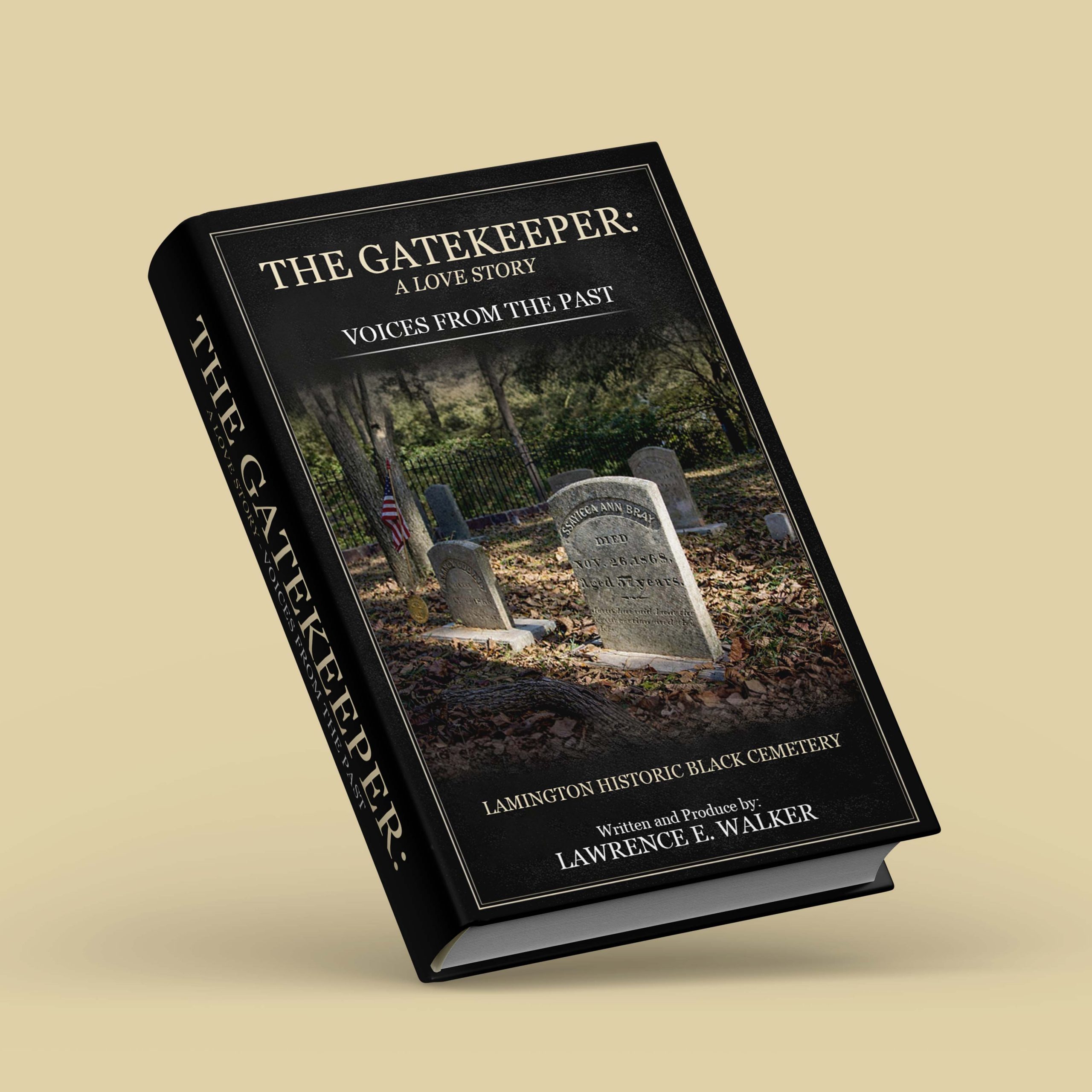
Some love stories are forgotten… Some are buried beneath the earth. But Caesar and Nancy refused to be erased. Bound by love… Connected by sacrifice… And devoted to a sacred cemetery that held the memories of their people. As darkness closes in and history threatens to disappear… One legacy will rise from the past. One love will stand the test of time. THE GATEKEEPER: A LOVE STORY VOICES FROM THE PAST. Where love, memory, and destiny refuse to stay buried.
History of the Lamington Black Cemetery
Nestled in the Lamington section of Bedminster Township, New Jersey, lies a hallowed ground that tells the stories of African American lives, both enslaved and freed. Known as the Lamington Black Cemetery, also referred to as the Cowperthwaite African American Cemetery, this sacred site stands on Cowperthwaite Road, preserving the legacy of generations past. A beacon of history and memory, the cemetery’s significance was highlighted during a powerful re-dedication ceremony attended by New Jersey dignitaries, including the Secretary of State, a former Governor, and a congressman. This solemn event celebrated the cemetery’s restoration and paid tribute to a Revolutionary War Soldier and Civil War Soldiers interred within its sacred grounds. Among those attending the ceremony were descendants of the Lane and Hurling families, whose ancestors rest beneath the cemetery’ s enduring grave markers and weathered tombstones.
The Lamington Black Cemetery is an African American Burial ground located in the Lamington section of Bedminster Township, New Jersey, on Cowperthwaite Road. It is recognized as a contributing property within the Lamington Historic District, which was officially listed on the National Register of Historic Places on June 21, 1984. Historical records reveal that the cemetery was formally established in 1857, although the earliest documented burial dates back to 1848 with Samuel Lane and maybe dates back to the mid-1700s during the revolutionary war. Historians also believe that burials of enslaved African Americans may have taken place there before 1844. Of the 97 known graves, 380only 37 are marked, many with plain fieldstone markers that bear no inscriptions. Two veterans of the United States Colored Troops are among those buried within the cemetery and maybe more. The cemetery also reflects the historic relationship with the Lamington Presbyterian Church, whose burial grounds served as a final resting place for both enslaved individuals and African Americans who later gained their freedom.
Today, the Lamington Black Cemetery stands as a testament to the resilience, dignity, faith, and indomitable spirit of the African American community. It reminds us of the sacrifices, struggles, and contributions African Americans made in shaping the history and cultural fabric of New Jersey and the United States. As we honor this sacred site, we pay tribute to the lives and legacies of those who rest there, forever engraving their stories into the heart of our collective memory. For many descendants, historians, and community members, the cemetery also represents one of the oldest surviving Black cemeteries in the country — Richard L. Smith, February 16, 2024 and Lawrence E. Walker, 2026.